✍ Shamshad Ahmad Khan-Pakiatan (The writer is a former foreign secretary)
I remember as he orated against the Soviet Union in the 1980s, President Ronald Reagan often quoted form Thomas Paine’s ‘Common Sense’ with his vision of a United States great enough “to begin the world over again.” It seems his two Republican successors, President George W. Bush at the very onset of the new millennium and lately Donald J. Trump, both have messed up so much to ‘begin the world all over again’. But in doing so, the former turned it upside down, and the latter now spares no effort to turn the world both upside down and inside out. Donald Trump couldn’t have ‘trumped’ it up more callously. No wonder, the world today is in a terrible mess.
Whether we agree or not, as U.S. President, Trump’s was a complex, if not idiotic, personality, thick-skinned on criticism of his policies and thin-skinned on personal slights. That makes him a poor politician and a bad diplomat. From his campaign rhetoric, character traits, long-held public views and Epstein-led business life, one thing was clear. Trump never looked at foreign policy in terms of America’s worldwide interests, but only as a profit-driven business transaction. As a businessman, his instincts of expediency and opportunism made him a bullying hand. To start with, he made trade tariffs a ruthless weapon to entrap and intimidate his rivals.
He didn’t even understand the real dynamics of global geopolitics and made America’s worldwide interests a family affair using his son and son-in-law as the key players. He also learnt from his notorious friend Geoffery Epstein the need to look for sites to build resorts. During his first term, he saw India a huge market that he had to cash in. He found in Modi a partner of the same breed and greed. Intellectually, both were devoid of ethics and morality. In August 2019, Modi abrogated Article 370/35A of the Indian Constitution lifting the special status of Jammu and Kashmir. But then Trump got trapped in Israeli Prime Minister Netanyahu’s ‘greater Israel’ stratagem.
The first thing he did under pressure from Netanyahu was to scratch the nuclear deal with Iran that had been signed in Vienna in July 2015 after long negotiations by the so-called P-5+1 Group (US, Russia, China, UK, France and Germany). The deal involved a Joint Comprehensive Plan of Action (JCPOA) binding Iran on uranium enrichment with verifications and inspections before any sanctions relief. In an ill-conceived move, Trump then recognised Jerusalem as Israel’s capital and moved the U.S. embassy from Tel Aviv to Jerusalem. This was a sordid departure from the U.S. policy and blatant violation of the UN resolutions. Trump’s decision was rejected by the world at large.
Leaders from within the Arab and Muslim worlds, and from the wider international community were swift to condemn the move as “a dangerous measure that would have repercussions” across the region. His crazy Board of Peace’ plan to convert Gaza into a ‘resort’ did not work. He then launched an ugly war against the Islamic Republic of Iran with perilous ramifications for the world at large. It was a war of choice for the US and Israel. For Iran, it a war of survival. No wonder, Iran resisted the aggression with courage and resilience. Donald Trump stood isolated, domestically as well as globally. No country in the world, not even Europe or NATO, supported him in his wrong war.
Trump has debilitated the entire multilateral system including the United Nations and its Security Council. A spiral of conflict is raging across the Middle East. Things have come to the boiling point with alarm bells ringing from the Maghreb to the Arabian Peninsula and Persian Gulf which are today a global hotspot scorching with heightened tensions and endemic conflict. Pakistan’s position throughout this crisis was consistent with its Middle East policy. As a major foreign policy constant, we do not take sides in any conflict or dispute between Muslim states. Under Article 40 of our Constitution, we are obliged to remain in solidarity with Muslim countries and causes.
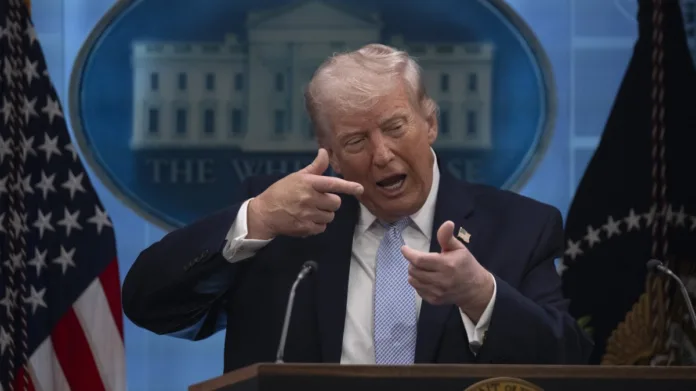
We have fraternal relations with all countries in the Muslim world as manifested in our full support and solidarity with the Muslim world and its legitimate causes. In the given situation, the only role we now have is one of a peace-maker, not combatant on any side or under any pretext of compulsion. While Donald Trump gave a ghastly deadline for Iran to open the Strait of Hormuz, Pakistan tried for a temporary ceasefire as part of its “two-stage plan” that could reopen the Strait of Hormuz followed by a permanent end to the war. On April 6, in an unusual briefing, President Trump sent mixed messages about escalating the war with senseless threats to send Iran back to “the stone ages.”
He crossed all limits of human dignity in threatening strikes on Iran’s power plants and bridges. For understandable reasons, this was not acceptable to Iran which wanted reparations for war damages, lifting of sanctions and removal of US bases from the Gulf countries in liu of a definitive end of war. While Trump was adamant in his abusive rhetoric, Iran made it clear that the region will return to normalcy only with durable peace and new configuration of power. That made lot of sense. The world order is already changing. Trump’s madness is indeed an alarming wakeup call to the Muslim world which must take control of its own destiny to regain its lost strength and power.
If there was a NATO-like Muslim entity in the world with its own political, economic and militray strength as a factor of global peace and security, and a stabilising force in world’s economic and fiscal system, there would have been no security vacuum or fears in the Muslim world. In fact, similar fears existed in the post-World War II Europe about the role of Germany but they were able to rovercome this problem through a regional cooperation system. The Muslim countries must also rise above their fears and come together in building bridges of trust and common interests. The right solution to this quandary comes from within the region, not from outside the region.
This, in fact, is the crux of the challenge that today world’s major Islamic countries with political, economic and military strength are confronted. These countries include Iran, Pakistan, Turkey, Malaysia, Indonesia, Egypt, Iraq and three key GCC States, namely Saudi Arabia, UAE and Qatar. They must develop their own defence capability and also make a niche for the Muslim world in global decision-making especially in the fields of economy, security, science & technology and counter-terrorism to play a role commensurate with its size and economic strength